IMO the biggest hurdle to overcome is the speed of the vapor. Needs to be slowed down in order to coalesce and fall out of suspension.
Yes- slowing the flow SPEED is good, so long as the volume is maintained.
Without dragging everyone through chem class, it is basic chemistry 101.
I could find a one or two page link if folks want that explain it better than I can, and much quicker I am sure. I have the information, I lack the language skills to express my info, as y’all unfortunately witness too often.
There are two things that cause a phase shift gaseous to liquid, liquid to solid:
Temperature and pressure. Think steam, water, ice. The easy control is temperature. Add heat to make solid ice go to liquid, more heat goes to gas phase as steam. Cooling it does the opposite. The problem is to cool the “boiled” oil back to solid would take a tremendous drop in temperature, while any amount of cooling that occurs is not bad, effort or expense to cool it isn’t going to bring much results. So running hoses, catch cans, etc away from heat isn’t just smart because heat plus oil equals fire, but getting the stuff cooled off will help.
Is it worth building a copper coil out of 1/2 tubing as the line from the cdr (or cdr location) so the passing airflow cools off the 25’ coil of copper before it gets to the provent? Idk. Maybe depending on the individual.
What about putting the coil of copper in a box of water so it forces the oil to cool- then you need a radiator and waterpump to circulate the water to remove the heat from the water which is cooling the coils. Idk. Maybe, depending on the individual.
Both would help and the water cooled system definitely would work better- but it a week of fabrication, hundreds of dollars in parts, turning the rest of the area int a non serviceable area worth all that?
Pressure is the other way. That is how the provent canister and filter work. The filter slows the flow of the gases enough to make SOME of the gaseous state oil vapors change into liquid. The design of the filter media captures the vapor as it transitions to a liquid form and wicks it away from that transition area down the housing and out the drain tube.
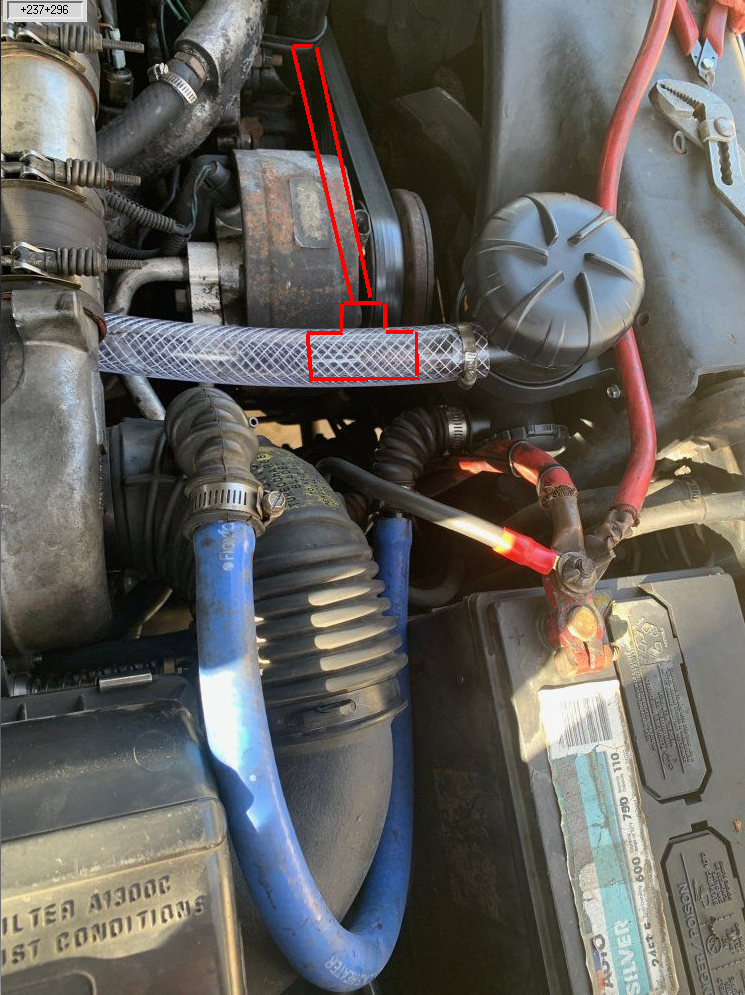
Honestly a compressor is far more effective, but a compressor that would do this and not be damaged over time, be cheap enough to be justified, this brings me back to several years ago when I brought up dry sump systems. A happy medium might be- if a guy has abandoned the belt driven vacuum pump because he wanted manual control over turbo boost, but the pump is still working and in place. First you need to know if it is just a bladder pump and not one that could ignite a fire. Assuming it is a bladder pump, then run copper line from the cdr location down under the truck along the frame away from the exhaust. Have it make a long route under the bed and back up towards the engine compartment.
then into the catch can, which has the other side hooked not to the inlet horn of the intake pre turbo- but instead hooked to the vacuum pump.
The miles of copper tube under the bed will give plenty of time to cool temperature, then any remaining vapors collect in the can- and the vacuum pump is simply the driver.
Or you might test and find going from the engine directly to the vacuum pump creates enough pressure in the oil mist filled gas that it compresses the oil into a liquid state. Have the catch can after the compressor.
The problem with either of these two options as a realistic test is the fire potential in the pump.