Skimming through this thread a bit.
Been through many of these over the years.
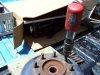
On the subject of the 4 bolts that hold the bearing assembly into the knuckle assembly.
DO NOT USE A THIN WALL 12 POINT SOCKET on these suckers. Either the socket can break or the bolt head rounds over.
Use an impact socket thats a 6 point.
YESSSSS I know, the socket will not fit into the counter bore in the knuckle !!!
I bought a 15 mm impact socket, stuck it in the lathe and took a cut on it so it would fit.
If you dont have a lathe, grind the socket on the outside so it will fit.
I broke a 12 point and rounded over a bolt the first one of these I did. AAAAARRRRRRRRGGHHH.
If you do mess up the bolt head, normally a 6 point will get it out.
Also, the hub bearings are sealed, DO NOT try to add more grease as doing so can damage the seals in the bearings and result in failure of the bearing.
As mentioned, clean the bore of the Knuckle of all rust and crud before reinstalling the bearing/rotor assembly.
Using either never seaze or a heavy duty graphite based wheel bearing grease to coat the bore of the knuckle before reassembly will make life far better the next time.
Also be sure to put a little never seaze on the threads of the 4 bolts that hold the bearing into the knuckle.
The spines on the axle that engage the hub are NOT interence fit and once the nut and washer are removed, the axle will slip back slightly with only a knock with a heavy soft hammer (Dead blow) or use a block of wood and a metal hammer.
I have never seen one of these axles stuck hard in the splines.
A little grease or never seaze on the splines is good too. Just a light coating to prevent rust.
If you reuse the lack nut on the axle, clean the threads on the axle and in the nut with brakeKleen and once dry apply a bit of BLUE loctite to the threads and then tighten the nut.
DO NOT USE RED loctite Repeat do NOT use the red stuff.
For you folks in Salt country, these processes can be a lot tougher as everything (as you know) down in the spray just disolves from the salt.
Doing anything on high mile brake calipers is a PITA. If yours are really nasty, trade them in on a set of recon'd ones.
Out here in the NW with the lack of corrosive ice melter these things can last 20 years and still be working fine.
Hard brake lines are another item thats subject to corrosion from the salt.
I have seen rigs that have come here from the eastern half of the country and I shudder when I see the damage that occurs in as little as 3-5 years.
My 89 K5 looks nearly as new on the under side, even after all these years.
The frame still has 99.9 percent of its factory paint and things like brake lines, other than the finish being a bit dull, are as good as new.
FWIW
If you are not in a big sweat and can plan ahead, tear the thing apart first, then head to the Parts house to get parts.
Take along a sample of the lug studs, and get new ones.
These can and do get a lot of abuse that you can't see (stress)
Don't use never seaze on the splines, it does make installing easier, but also make them easier to come out when you dont want them too.
If you are reusing a bearing and just replacing the rotor/s be careful to examine the bearing/s well while things are apart.
These bearings are not nearly as durable as the tapered cone type bearings used in the older straight axle hubs.
Rough off road use and especially if the rig has some large tires can and does task these bearings a LOT.
The fact that you can't see inside the bearing and look at the parts is troublesome.
Small areas that are starting to "brinell" can go unnoticed. (This is denting of the running surface) which is the precurser to failure.
If the hubs have been in a lot of water/salt over time there is a real likelyhood that some water could have found its way into the bearings. RUST can start forming PITS on the bearing surfaces and you can't see it and with the type of construction of the bearing, you can't feel it by turning it by hand.
The grease will make a bearing thats starting to go away seem fine.
If the rig has over 100K miles and this is the first time apart, toss the old hub bearings and give yourself some real piece of mind.
These are not an easy thing to change out in the Boonies or along side the road.
GM did not do us any favors when they designed the IFS front ends.
The design depends greatly on the "centering" of the load over the bearing for it to have a reasonable life span.
Adding your favorite off road tires that are much larger than stock, along with the much heavier offset wheels, places a huge amount of stress on the bearngs, stress that they were never designed to handle.
One good 4x4 session on some rutted, nasty old back woods road, can really beat these hub bearings badly.
I am not saying, don't lift the rig and add the cool looking HUGE tires, but when you do, remember the little whimpy arsed bearing thats supporting all the forces at work down there.
This is especially true if you are looking at a 1/2 ton pickup, Burb or Tahoe.
As the tire size increases and wheels with more offset towards the outside get installed, the leverage on the wheel bearings really goes up.
The rear end is no different now than it has been. The 1/2 ton rigs still have much smaller bearings than do the 3/4 and 1 ton rigs.
Just some thoughts.
Missy
This is a great thread and will hopefully help many who are on their first journey into tearing into a Hub/bearing rotor.