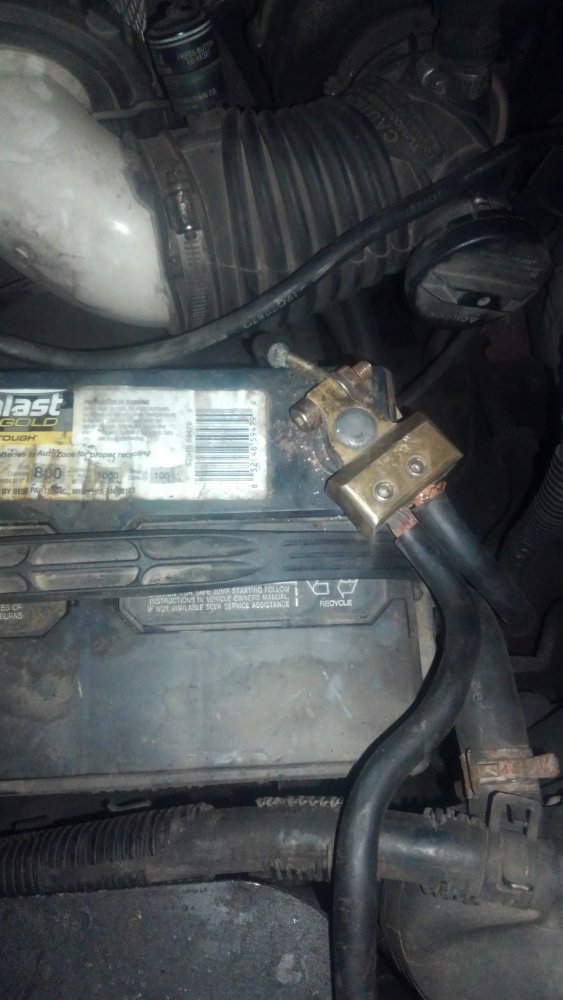
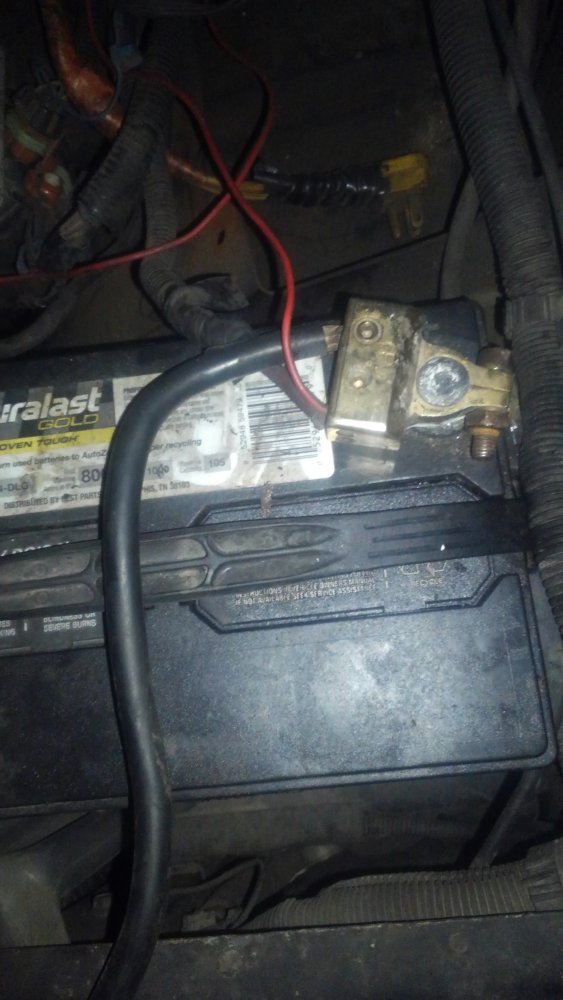
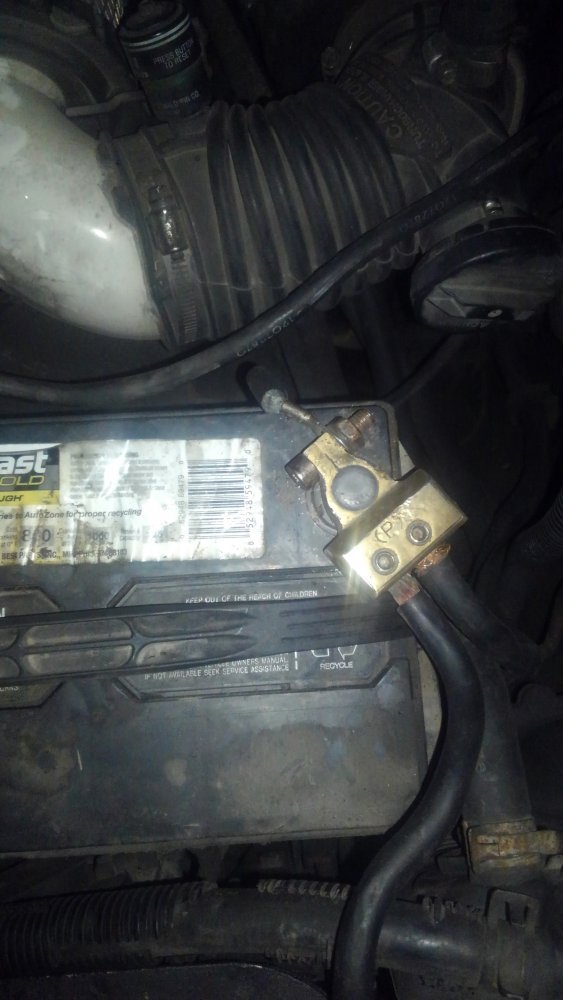
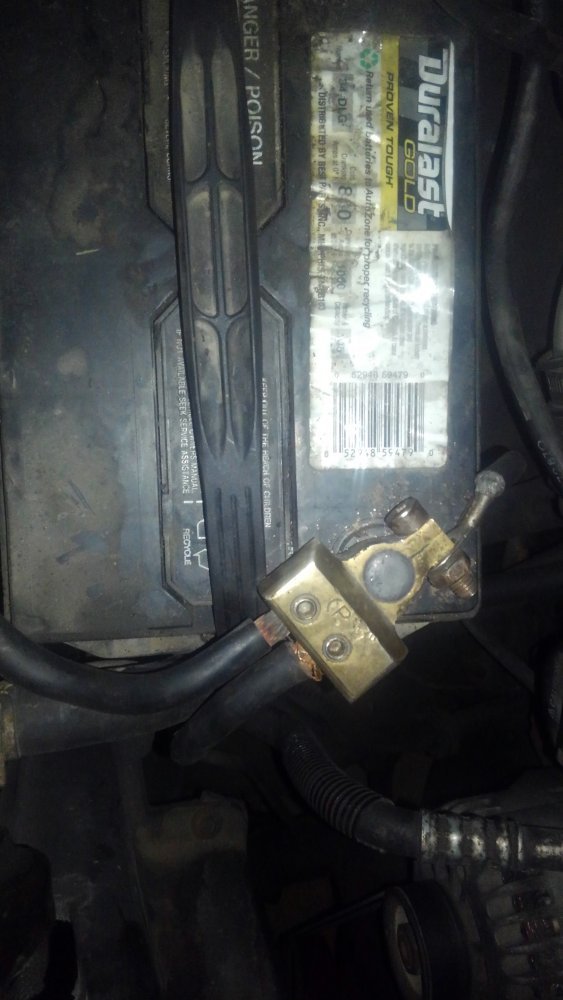
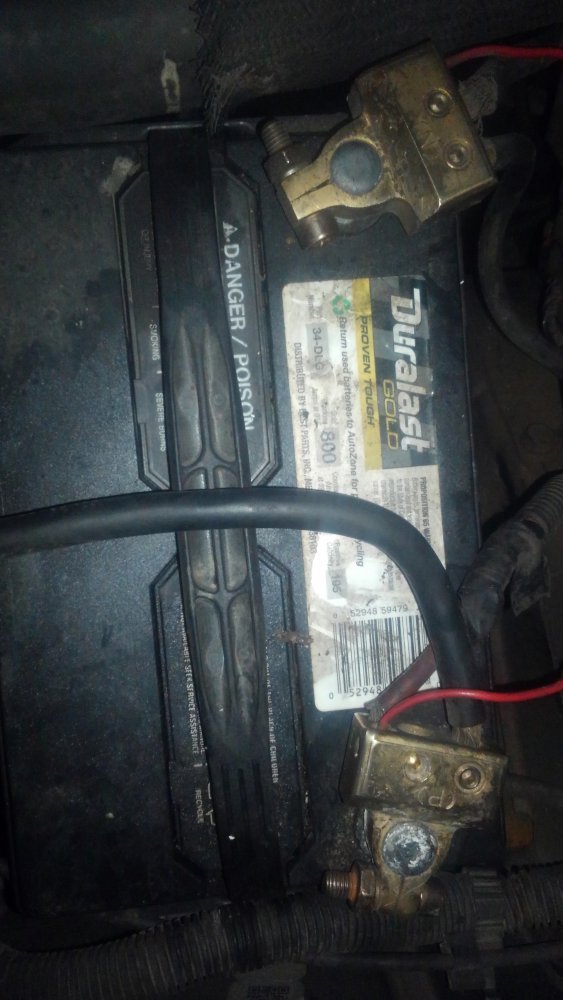
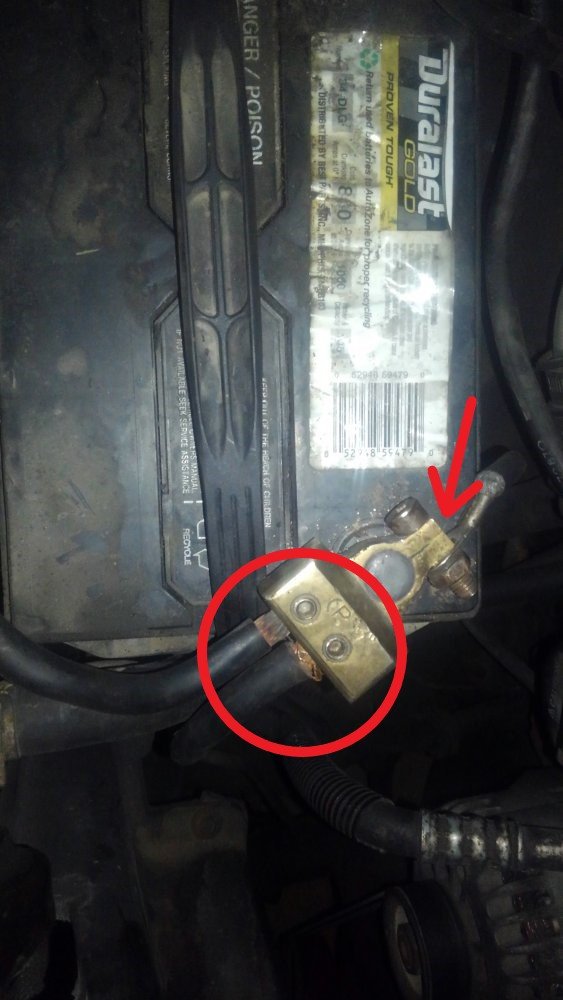
Those battery terminals look like they're more for somebody's competition sound system than for carrying a thousand amp surge of a starter. The single cable terminal shows cable corrosion as well as corrosion on the terminal itself in that picture. Are those brass (or gold plated brass) terminals you're using,
@Stoney ? If so, ditch them. Clean those cable ends like
@Will L. said, then get some ⅜" copper cable lugs of the proper gauge and properly crimp them on, then solder them and put marine-grade heat shrink tubing over the lug's collar and the first inch of cable insulation and shrink it to make the connection water/battery acid resistant (the small end of the lug collar by the terminal hole should be full of solder, to keep acid from creeping up the copper strands). Get two of the heaviest duty MARINE battery terminals you can find (O'Reilly's and NAPA both sell really good ones that are corrosion-resistant epoxy coated). Throw away the wingnut for the top stud. Take a file and file the bulge around the base of the top stud down so it's flush with the terminal top. Now, take some ElectroCut, emory cloth or 200 grit and LIGHTLY polish the battery post and the inside of the marine terminal. Do NOT use those metal, angled finger, post/terminal scraper-type cleaners - they take WAY too much metal off the post and inside the terminal - making the post too small and the terminal too big and resulting in the terminal ends bottoming out when the bolt is tightened and thus a poor electrical/mechanical connection/loose terminal. Don't use those steel wire brush post/terminal cleaners either, for the same reason.
Push the loose terminal all the way down on the post (those green and red felt anti-corrosion washers are ok) until it bottoms, then tighten the terminal's clamping bolt until the terminal can't rotate either way when twisting with your hand. The ends of the terminal should be ⅛" to 1/16" minimum apart and NOT touching when the terminal won't twist. If they're touching and the terminal still moves, then the post has been "cleaned" too small in diameter and the terminal legs tips need to be filed to gain more clearance for proper clamping.
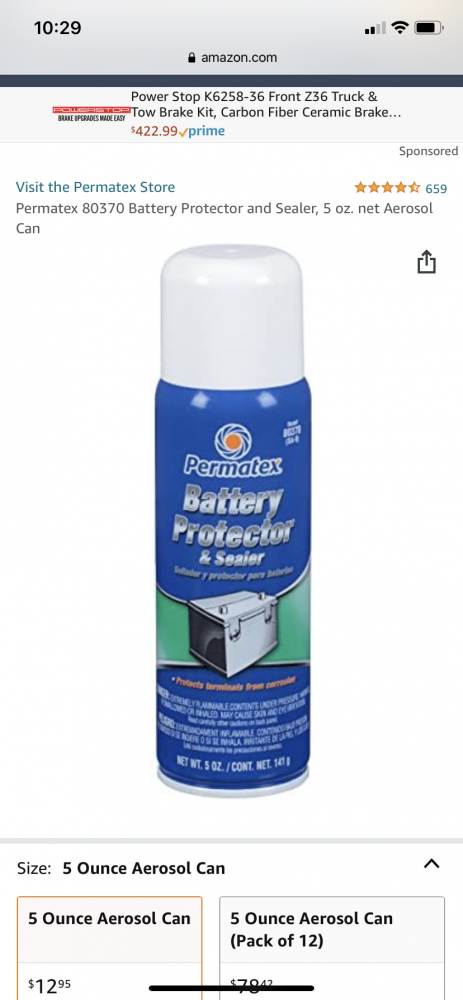
Once the terminal is tight, take some ElectroCut, emory cloth, etc and polish BOTH sides of each copper lug until bright, then place them over the terminal's top stud and using a Stainless Steel split washer and nut, tighten the nut to about 20 lb/ft torque. You now have a secure, highly conductive, battery/terminal/cable connection. Next, spray the assembly thoroughly and completely with battery anti-corrosion compound as
@Will L. suggested. Repeat for the other (Driver's) battery single cable Positive.
Also,
@Stoney, do your Negative cable ends still have the Side Terminal ends on them? If so, how did you adapt the terminal connection to your top post batteries? Marine terminals are perfect for the OEM side post cable ends to connect to. Just use Stainless Steel nut and split lock washer to fasten with. You can also ditch the black plastic around the factory lug end, if you want.
If you jerry-rigged the Negative cable ends like the Positives in the pictures are, well, you just doubled your electrical/starting issues, as those electrons need an as UNinterrupted path BACK to the batteries as they do TO the device to be powered (starter, auxillary lights, heater blower, aftermarket stereo, etc.) in order to flow and power properly