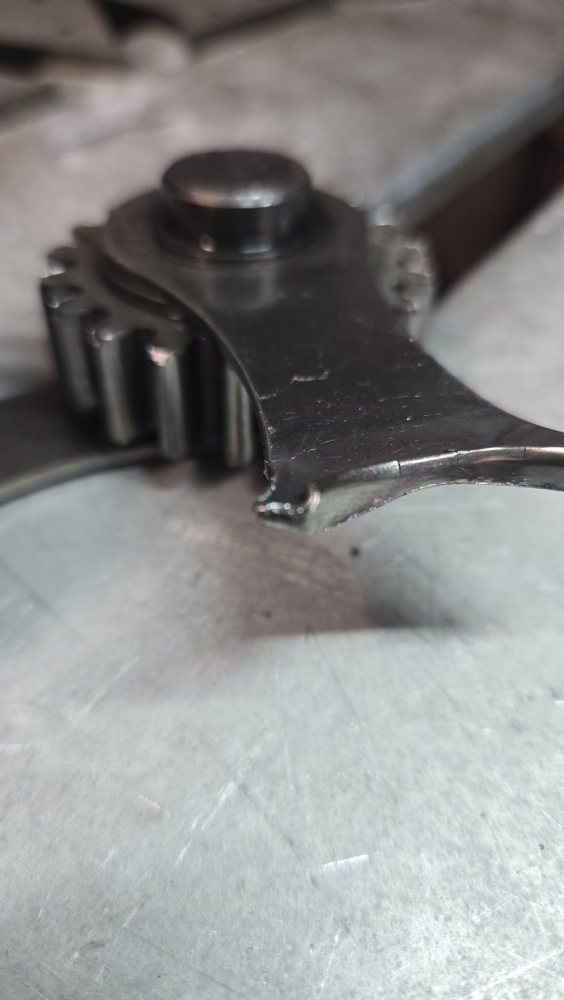
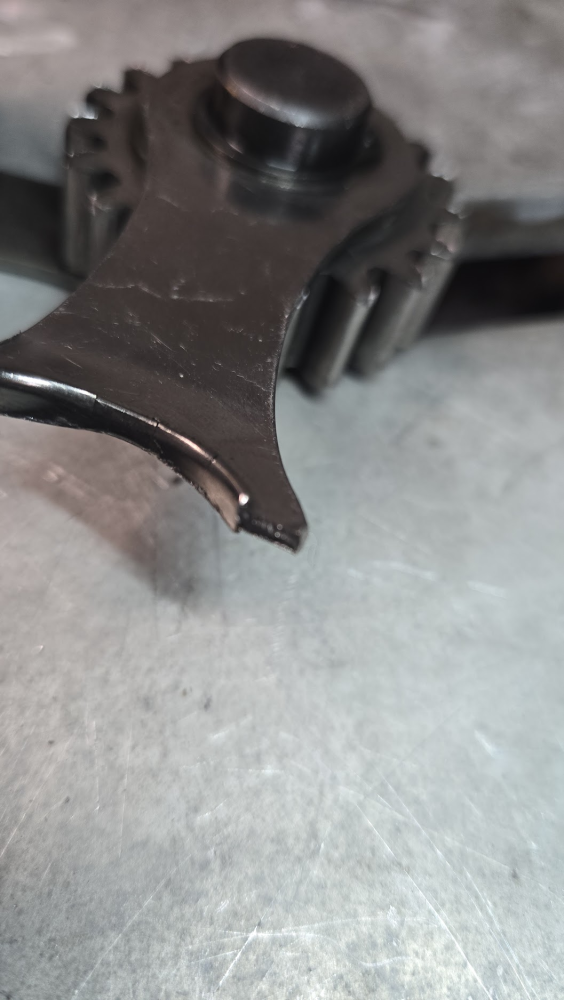
If it’s a force issue that pushed the gear out through the plate- then thicker might be the answer- but metal hardness would come into play long before then.
My hardness file set went byebye year’s ago.
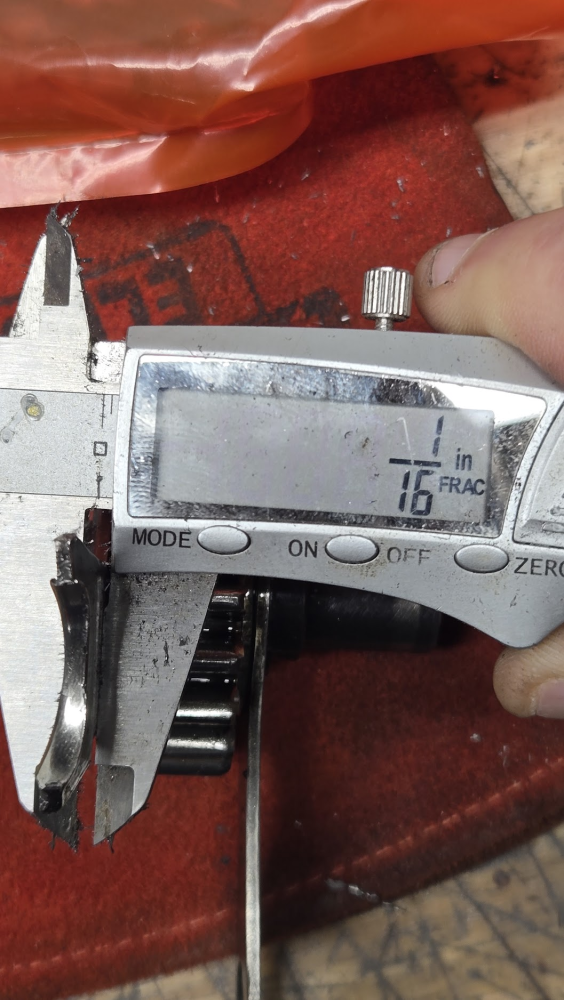
But remember these are copies of the DSG design. It’s been way too many years for me to even guess at how thick the dsg set is. Thats what is needed - not guessing. What thickness & hardness is the dsg set?
I dont know anyone that has a dsg set that:
1. Doesn’t have them installed
2. Would be willing to put a file test to it just for others to learn.
I suppose a person could do some comparisons to say BBC, Chrysler, etc and find out what those are. If anyone is playing in the dragstrip frequently where you can find guys doing teardowns of engines running them.
Otherwise it’s speculation.
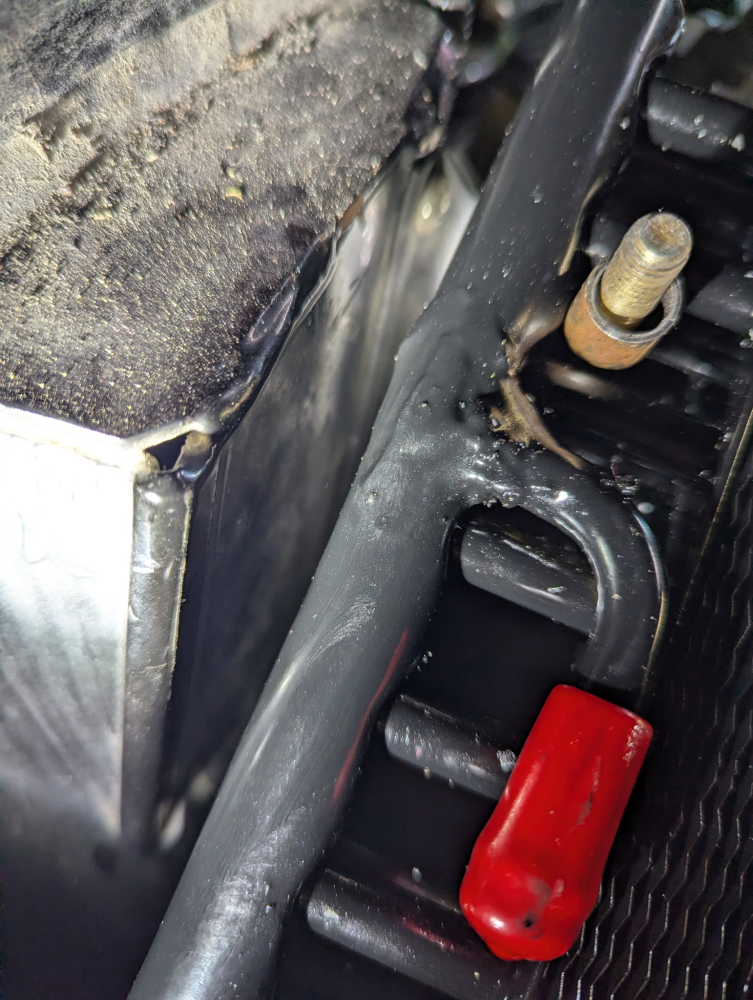
The two spinning axle marks in the timing cover- do they match up with the axles before the plate failure or afterwards.
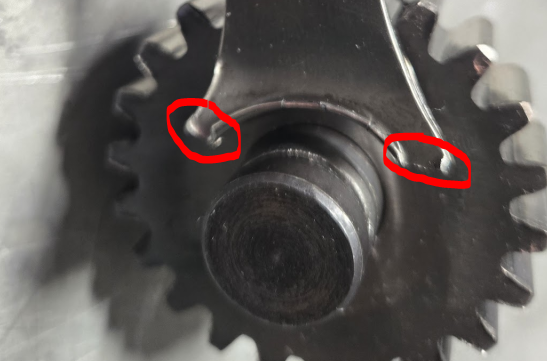
if the axles were spinning in the correct position (as I believe they were) then the failure happens by pressure on the axle not allowing the dogbone assembly to free float. This will cause binding as the crank or cam gear tries to push away the floating gear but cannot because the axle is pinched. So the force is going to make the gear push the axle every so small an amount snd that added drag now makes the axle start to spin. The spinning was apparent on the timing cover. Now you have the axle trying to spin at the speed the engine (or half speed of engine if binding on cam gear). The axles are supposed to be free floating and because of this will rarely spin in the plate.
If you look at the plate- you have to imagine how did it fail like this.
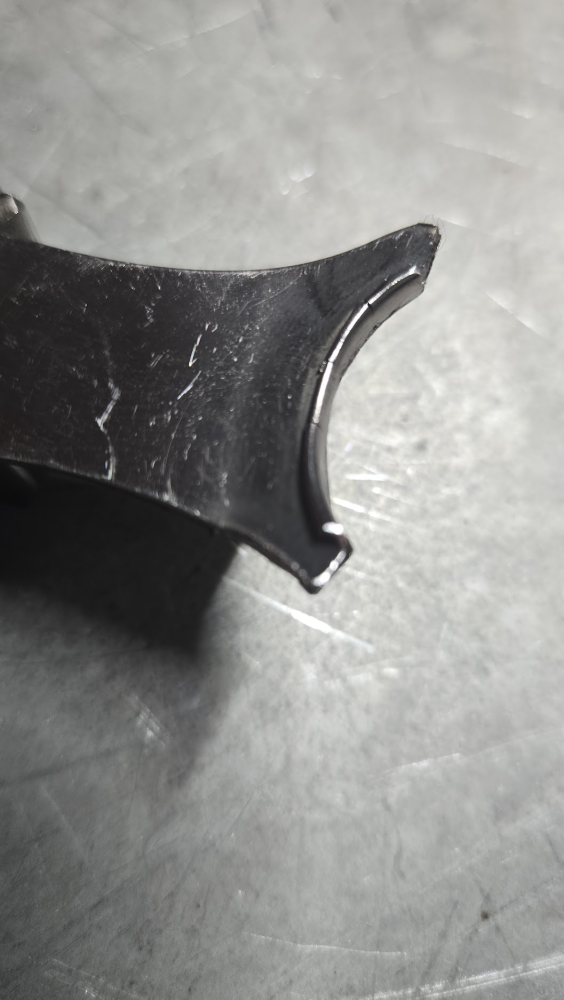
1. The axle was rotated to dig into the plate and cause the grove you see all the way around the axle.
2. You can see the axle was being pushed outward away from the center of the dogbone. That outward force is normal but it makes the dogbone assembly move away however it couldn’t move away as an assembly for some reason. Unless the dogbone axle holes are built too close to each other- then it had to be the axle was holding it in place.
Idk if we could search the web and find it- but there used to be a diagnostic poster that was made by Pete Jackson iirc.
It showed both the spinning axle marks and the side load wear between axle and plates as being caused by improper end clearance of the axle to block/timing cover.
Now, what if the plate was twice as thick? If the axle is still spinning all the time at the speed of the crank gear driving the dog one gear- there is no bearing there. It will still wear out like this and seize or wear through enough to cause the two dogbone gears to become too far apart.
Think through the force of the 1 gear that is carrying the load from crank to cam. The crank gear spins and pulls the dogbone gear into the cam gear. The greater the force, the tighter the gear gets pulled into the crank & cam gears. It does it to the point that the optimal gap isn’t there. When you set up a differential gear to tight - the differential howls. That is why the gear drive systems have that distinct whine to them. And the higher the rpm the more it whines because it is pulling the gears into meshing together tighter snd tighter.
It does not push the gear away or the other gear would get jammed into them and the gears would be binding against each other.
So the force of the floating gear is inward against the dogbone plate.
Not outward as we see was the case in this damaged set.
To get the outward force means the dogbone assembly was trying to be pushed outward and the assembly couldn’t move out of the way. This means it couldn’t freely move or free float.
The gear being pushed outward against the outer circle of the dogbone should not have any force on it- but obviously here there was.