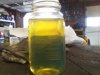
Have you opened the water drain and drained some "stuff" into a glass jar and let it sit 10 Min? See if you really have a water problem by the water settling to the bottom with yellow fuel on top. This is where you need to start to see if you have a real water problem or a failed sensor or short.
Also a fuel system restriction from a plugged filter or fuel waxing plugging a filter can trigger the Water In Fuel light. Some years have this some not.
:suicide:
I don't know where to start on this. I'll take it easy. This is the #1 reason GM diesels failed in the market. Water remover is for gasoline engines and specifically so water doesn't freeze in the fuel line causing the engine to stop. It mixes the water into the fuel so it is carried to the carb and run out of the system with the fuel into the engine.
On a diesel engine water having zero lubrication value and being a larger molecule than diesel fuel does some funny things at the 1800+ PSI the fuel lubricated injection system runs at. Funny expensive things.
This is why the "water in fuel" light is red just like the No Oil pressure, Hot, and generator failure light. It means "stop!" the vehicle ASAP as damage can be done. Yellow like service engine soon and low fuel is, well yellow caution.
So the first line of defense is a sump in the bottom of the fuel tank so water settles to the bottom and the fuel pickup is over any small amount of water in the bottom of the tank. Then the tank sock rejects some water and has it fall to the bottom of the tank. Any water getting by this hits the water separator and fuel filter dual purpose element and falls to the bottom of the filter. When water collects here it triggers the water in fuel light by a float or other means.
If water gets past the filter it enters the injection pump that is lubricated by fuel causing scoring and corrosion. The advance piston would be an area harmed. The water then goes on to the injectors where it scores the pintles. Then think of water turning into steam due to combustion heat at the injector tip. It blows the nozzles off some types and can break the pintle in ours. Injector failure causes fuel to enter too soon like pre-ignition and the now excessive combustion heat on the compression stroke will melt the piston quickly. Failure of the complete engine from a bad injector looks like the pic in my avatar to your left.
You absolutely do not want water in your injection system. The above describes a small amount of water. A large slug of water will simply ruin the injection pump and likely break it's drive shaft from locking it up.
Using a product that "eliminates water" means it emulsifies the water in the fuel rather than letting it settle out. The water now travels to the filter and some water goes through it instead of being separated out. The alcohol used also attacks the governor flex ring on any pump made before ~1985 (or 1986?) that have not been updated with a newer, EID, part. So you have water and possibly another issue in the IP. then on to the injectors...
A product that separates the water is what you want to use. Some diesel engine stuff doesn't do that and I wonder how it stays on the market. Other ways to remove water would be to drop and drain the tank, use a water absorbing sock, or suck the tank dry through the fill neck.
Draining water at the filter and then confirming the light goes off is fine. Then start the engine and see if the light comes back on. Stop the engine after a couple min and check for water again. A third time of finding water means you got a big slug of water and need to drop the tanks to remove it - or remove it by other ways suggested above.